
Why Every Service Call Is More Expensive Than You Think
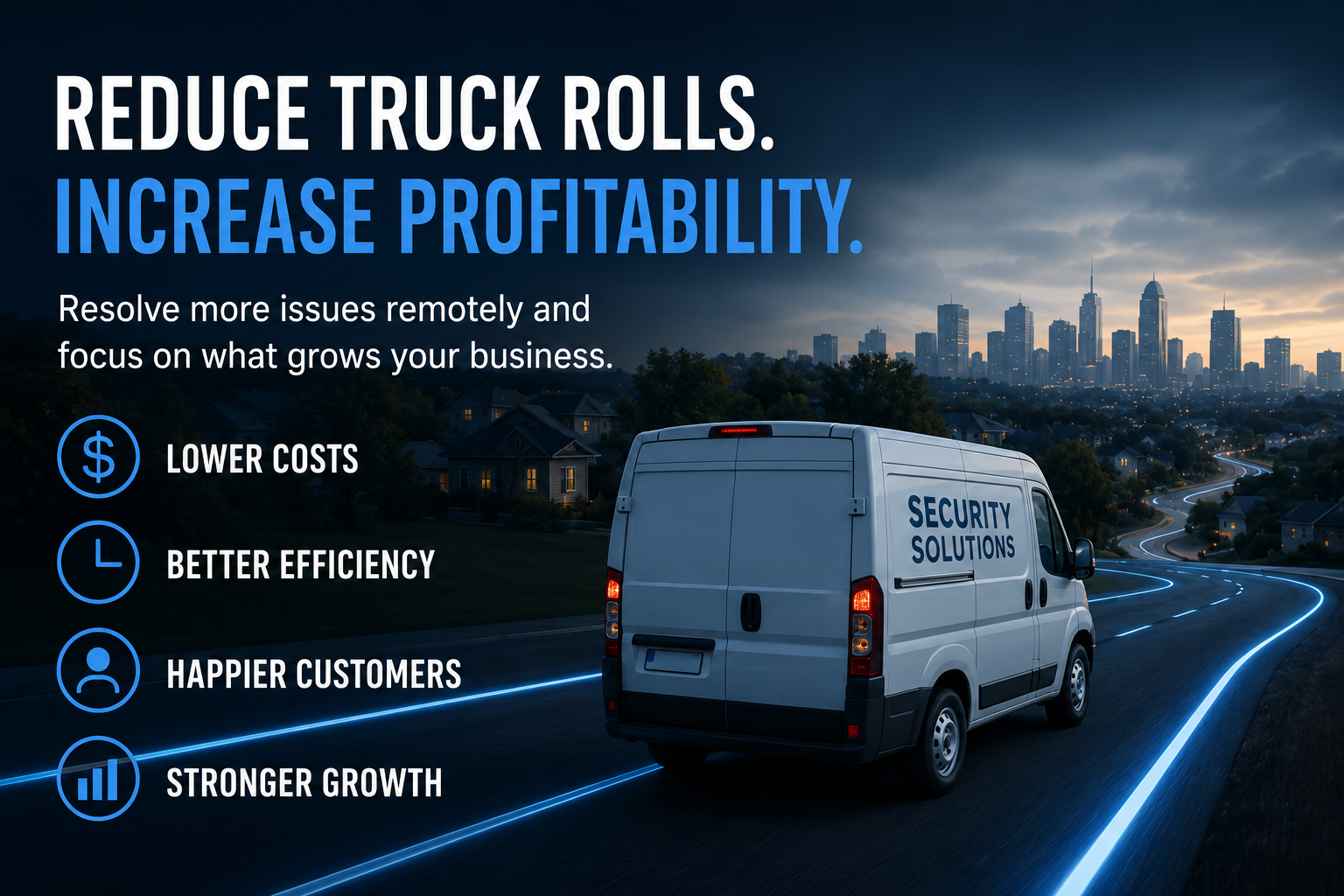
For many security dealers and integrators, service has long been viewed as a necessary cost of doing business. A customer calls with an issue, a technician is dispatched, the problem is resolved, and everyone moves on.
But today’s market is changing.
Rising labor costs, technician shortages, fuel expenses, and growing customer expectations are forcing security companies to rethink how support is delivered. While most organizations carefully track installation profitability and hardware margins, many underestimate the true cost of a truck roll.
What appears to be a routine service visit often impacts profitability, technician utilization, customer satisfaction, and long-term growth.
The Traditional Service Model
For decades, the security industry relied on onsite service because remote access was limited and systems were largely isolated.
Today, however, many service calls involve issues that have little to do with hardware failures, including:
- Recorder password resets
- User account changes
- Network connectivity issues
- Camera status verification
- Configuration adjustments
- Health checks
- Basic troubleshooting
In many cases, these visits consume hours of technician time despite requiring only a few minutes of actual work.

Understanding the True Cost of a Truck Roll
Most organizations evaluate service costs based on technician wages and fuel consumption. While important, those expenses represent only part of the equation.
Every truck roll typically includes:
- Labor
- Travel time, preparation, documentation, and follow-up all contribute to the total cost of a service call.
- Vehicle Expenses
- Maintenance, insurance, registration, repairs, depreciation, and fuel continue regardless of whether a technician is generating revenue or responding to a support request.
- Administrative Overhead
- Scheduling, customer communication, reporting, and coordination consume valuable resources that are rarely attributed directly to the truck roll.
- The Hidden Costs Most Dealers Overlook
- The most significant costs are often the ones that never appear on an invoice.
- Lost Installation Capacity
- Every hour spent driving to a service call is an hour that cannot be spent installing new systems or generating revenue.
- Reduced Scalability
- As customer bases grow, traditional support models become increasingly difficult to maintain. Supporting twice as many customers often requires nearly twice as many service resources.
- Customer Expectations
- Today’s customers expect immediate responses, remote support, and proactive notifications. Waiting days for a technician visit no longer aligns with the experience many customers expect.
Why Truck Rolls Are Becoming More Frequent
Ironically, modern technology has increased the number of support opportunities dealers face.
Today’s systems include:
- More cameras
- More connected devices
- More users
- More remote locations
- More software integrations
At the same time, businesses are becoming increasingly distributed, creating greater demand for support across multiple locations while technical resources remain limited.
The Shift Toward Remote Service Models
The security industry is beginning to follow the path established by managed IT providers, focusing on proactive support instead of reactive service.
Modern security platforms enable dealers to:
- Monitor system health remotely
- Manage users and permissions
- Review device status and configurations
- Troubleshoot issues remotely
- Access cloud playback and investigations
Rather than waiting for customers to report problems, dealers can identify and address issues before they become service calls.
The Business Impact of Reducing Truck Rolls
Reducing truck rolls creates benefits that extend far beyond cost savings:
- Improved profitability
- Better technician utilization
- Faster customer support
- Increased customer retention
- Greater scalability
Collectively, these advantages help create a more efficient and resilient business.

Looking Ahead
Truck rolls will always play an important role in the security industry. Hardware still needs to be installed, maintained, and occasionally serviced onsite.
However, many of today’s most common service requests no longer require a technician to get behind the wheel.
By adopting remote management strategies and cloud-connected service models, dealers can reduce operational expenses, improve responsiveness, and create a foundation for scalable growth.
Platforms such as SecureGuard® Cloud help support this transition by providing tools for remote monitoring, system management, cloud playback, and proactive customer support.
The result is a smarter service model—one that reduces unnecessary truck rolls while improving efficiency, customer satisfaction, and long-term profitability.
Contact us today.